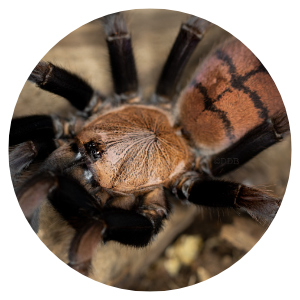


Brazilian Black and White (Nhandu coloratovillosus) 1-2cm
R200,00
Nhandu coloratovillosus (Brazilian Black and White)
General Information:
- Scientific Name: Nhandu coloratovillosus
- Common Name: Brazilian Black and White Tarantula
- Origin: Native to Brazil and Paraguay
- Size: Adults typically reach a leg span of 15-18 cm
- Lifespan:
- Females: Can live 15 to 20 years with proper care
- Males: Typically live 3 to 5 years after reaching maturity
Habitat and Enclosure:
- Enclosure Type: Terrestrial species requiring a horizontally spacious enclosure
- Enclosure Size: A minimum of 30x30x30 cm for adults, though a larger enclosure is beneficial
- Substrate: Use a deep layer 10-15 cm of coconut fibre, peat moss, or a mix of soil and vermiculite to allow for burrowing
- Temperature: Maintain a range of 24-29°C
- Humidity: Moderate humidity of 65-75%, achieved through occasional misting
- Ventilation: Ensure good ventilation to prevent mold growth and excessive moisture buildup
Diet:
- Primary Diet: Feeds on live insects such as crickets, roaches, and mealworms
- Feeding Frequency:
- Juveniles and slings: Feed every 2-3 days
- Adults: Feed once or twice a week, adjusting based on body condition
- Water: Provide a shallow water dish with clean, fresh water at all times
Behaviour and Handling:
- Temperament: Can be skittish and defensive; known for being more active compared to other terrestrial species
- Handling: Not recommended due to their defensive nature and tendency to flick urticating hairs
- Defence: Will often kick hairs when disturbed and may adopt a defensive posture if provoked
Health and Maintenance:
- Molting: During molting, they will refuse food and become more reclusive; maintain slightly higher humidity to assist in molting
- Cleaning: Spot clean the enclosure regularly and replace the substrate when necessary
- Health Issues: Watch for dehydration (shrunken abdomen) and fungal infections (due to excessive moisture and poor ventilation)
Additional Notes:
- Lighting: No special lighting required; avoid direct sunlight
- Decor: Provide hides such as cork bark, artificial caves, or logs to mimic their natural environment
This species is a prolific flicker, we recommend wearing gloves when handling. With proper care, the Brazilian Black and White Tarantula can thrive in captivity. Their beautiful colouration and size make them a must have for any tarantula keeper. They are a great species for beginner to intermediate keepers.