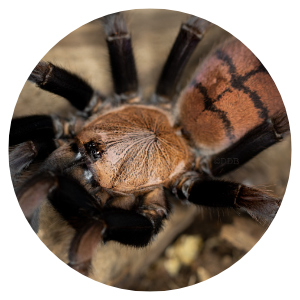


Asian Giant Fawn Tarantula (Chilobrachys Huahini)
Chilobrachys huahini (Asian Giant Fawn Tarantula) Care
- Scientific Name: Chilobrachys huahini
- Common Name: Asian Giant Fawn Tarantula
- Origin: Found in Thailand and other parts of Southeast Asia.
- Size: Adult females typically reach a leg span of 15-18 cm. Males can reach 10-15cm.
- Lifespan:
- Females: Can live up to 15 years or more with proper care.
- Males: Have a shorter lifespan, usually around 3-5 years.
Habitat and Enclosure:
- Enclosure Type: These are a fossorial species, so they require a deep substrate to allow for burrowing behaviour. You can also add some branches around the enclosure as they are prolific webbers.
- Enclosure Size: A minimum enclosure size of 30x30x30 cm is recommended for adults. More space is beneficial, but they often spend most of their time in their burrows.
- Substrate: Use deep layers of substrate such as coconut fiber, peat moss, or a mixture of potting soil and vermiculite. Aim for a depth of at least 15-20 cm to facilitate burrowing.
- Temperature: Maintain a temperature range of 24-29°C.
- Humidity: Keep humidity levels between 70-80%, which can be maintained by lightly misting the enclosure and ensuring the substrate remains slightly damp.
- Ventilation: Good ventilation is essential to prevent mold and ensure a healthy environment. However, the enclosure should still retain some humidity.
Diet:
- Primary Diet: Feed live insects such as crickets, roaches and mealworms. Larger prey like superworms can also be offered occasionally.
- Feeding Frequency:
- Juveniles and slings: Feed every 2-3 days.
- Adults: Feed once or twice a week. Adjust the feeding schedule based on the tarantula’s appetite.
- Water: Provide a shallow water dish with clean water. Ensure the dish is kept full and clean.
Behaviour and Handling:
- Temperament: Chilobrachys huahini is an old world species and is known for being defensive and fast, making them less suitable for handling.
- Handling: Not recommended due to their speed, defensive nature, and tendency to bite when threatened.
- Defence: They may rear up and show their fangs when threatened and can deliver a painful bite if provoked.
Health and Maintenance:
- Molting: During this period, they will refuse food and have a more dull colouration. Ensure the humidity is slightly increased to aid in a successful molt.
- Cleaning: Regular spot cleaning is necessary to remove uneaten food and waste.
- Health Issues: Watch for signs of dehydration (shrunken abdomen) and fungal infections (caused by excessive humidity and poor ventilation). Proper care and observation are essential for early detection and treatment.
Additional Notes:
- Lighting: No special lighting is required. Keep the enclosure out of direct sunlight to avoid overheating.
- Decor: Provide hides, such as cork bark or artificial caves, to offer the tarantula a sense of security. The enclosure should mimic a natural environment to encourage natural behaviors.
By maintaining appropriate environmental conditions and a proper diet, Chilobrachys huahini can thrive in captivity. Due to their defensive nature, they are better suited for experienced keepers. Regular monitoring and careful handling of the enclosure are crucial for the tarantula’s health and well-being.